





MAP-Controlled Thermostats: How ECM Technology Improves Fuel Economy, Performance and Emissions
The thermostat is one of the most fundamental components in an engine’s thermal management system. For decades, it performed a single job: open when the coolant reaches a set temperature, close when it dropped below it. That straightforward mechanical logic served internal combustion engines well – but it has limitations that modern engines can no longer afford.
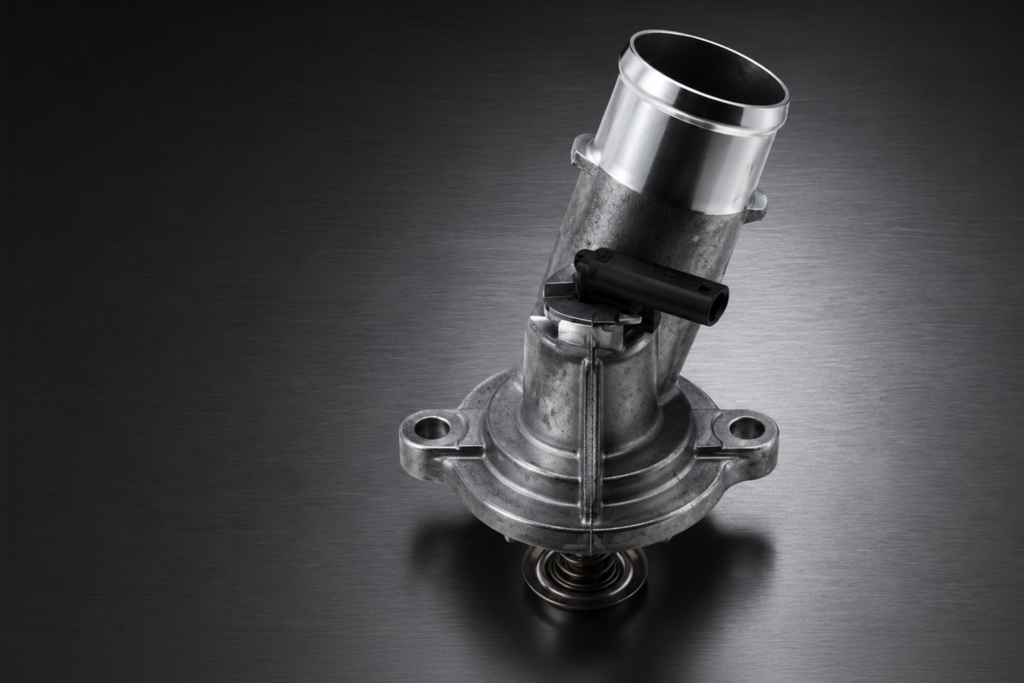
MAP-controlled thermostats represent a significant step forward. By combining traditional temperature-based operations with signals from the Engine Control Module (ECM), they allow the engine to manage heat more precisely – adapting in real time to driving conditions rather than reacting to temperature alone.
Know the Signs.
Replace the Assembly.
How a MAP Thermostat Works
A standard thermostat responds to one input: coolant temperature. When the coolant reaches the thermostat’s opening point, the valve opens to allow flow through the radiator. When the temperature drops, it closes again.
A MAP thermostat operates on the same thermal principle but adds a second layer of control. An electric actuator inside the thermostat housing receives commands from the ECM, which continuously monitors engine load, vehicle speed, fuel consumption and other parameters. Based on this data, the ECM can instruct the thermostat to open or remain closed -independent of coolant temperature alone.
What Changes in Practice
The dual-input logic of a MAP thermostat delivers 3 measurable benefits:
- Better fuel economy. At highway speeds, the ECM keeps the thermostat closed longer – allowing the engine to run at a higher coolant temperature. A hotter engine burns fuel more efficiently, reducing consumption in everyday driving conditions.
- Instant performance response. Under increased load – overtaking, climbing a gradient, or towing – the ECM detects the change and opens the thermostat immediately. Coolant temperature drops and engine performance is protected, before thermal stress builds.
- Lower emissions. Consistent operation within the engine’s optimal thermal range produces more complete combustion and fewer harmful exhaust by-products – a direct consequence of tighter temperature control across every drive cycle.
Failure Symptoms and Service Considerations
Because the MAP thermostat includes an electric actuator, its failure modes differ from those of a conventional thermostat.
Common symptoms of a fault include:
- Engine Management Light illuminated
- Reduced fuel economy
- Increased exhaust emissions
- Engine temperature outside the expected range
Diagnosis typically requires a scan tool. When a fault is confirmed, the complete thermostat assembly must be replaced – the electric actuator cannot be serviced separately.
MotoRad MAP Thermostats
MotoRad has been engineering thermostat technology since 1958 – including electrically controlled and ECM-driven MAP assemblies. Supplied as complete units to OE specification, MotoRad MAP thermostats cover major EMEA applications across VAG Group, BMW Group, Stellantis, Renault Group and Ford Europe vehicles.
For full application information, visit eu.motorad.com or contact your local MotoRad representative.
Trusted to Deliver Better
