





Why Mixing Coolant Types Can Cause Sludge, Overheating, and Repeat Thermostat Failure
Engine coolant chemistry plays a complex role in engine performance. Modern coolants are precisely engineered with specialized formulas and additive packages designed for specific applications. As these chemistries have become more advanced and application-specific, maintaining coolant consistency and avoiding cross-chemistry mixing has become increasingly important.

When chemical consistency is not maintained, coolant can become unstable, leading to fluid breakdown, reduced lubrication, sludge formation, and even clogging. In service, this can lead to overheating, restricted circulation, unstable temperature control, and repeat thermostat-related failure.
For many technicians and vehicle owners, those symptoms look like a failed thermostat, housing, or water pump. In some cases, however, the root cause begins earlier inside the coolant itself.
Never mix different coolant types!
Why coolant compatibility matters
Not all coolant types are designed to work together. Conventional IAT, OAT, and HOAT coolants use different inhibitor packages and chemistry strategies. The sample bulletin language is direct on this point: many IAT, OAT, and HOAT coolants do not mix, and mixing them can create a gelatinous substance that blocks the system and causes widespread damage.
That reaction may not be obvious right away. A cooling system can look normal at first, then gradually develop contamination, reduced flow, and erratic temperature behavior. By the time overheating or repeat thermostat problems appear, the instability may already be affecting the fluid and the cooling system as a whole.
This is also why coolant color alone should never be treated as proof of compatibility.
What the testing evaluated
To evaluate this behavior, conventional IAT coolant was combined with Violet OAT, Blue HOAT, and Orange OAT, then exposed to repeated thermal cycling at approximately 105 C.
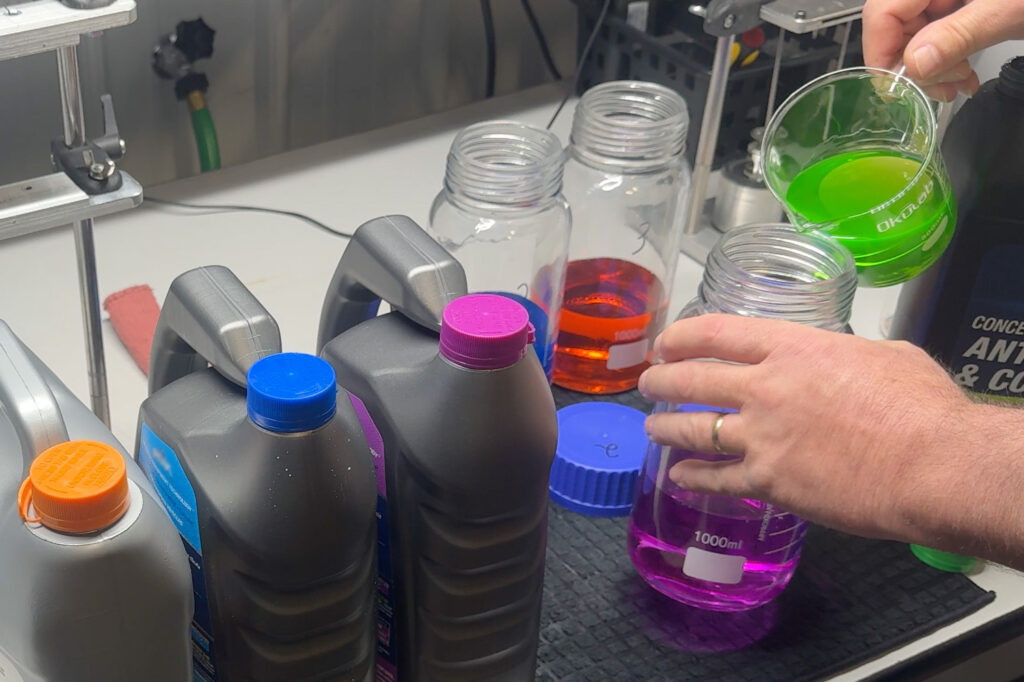
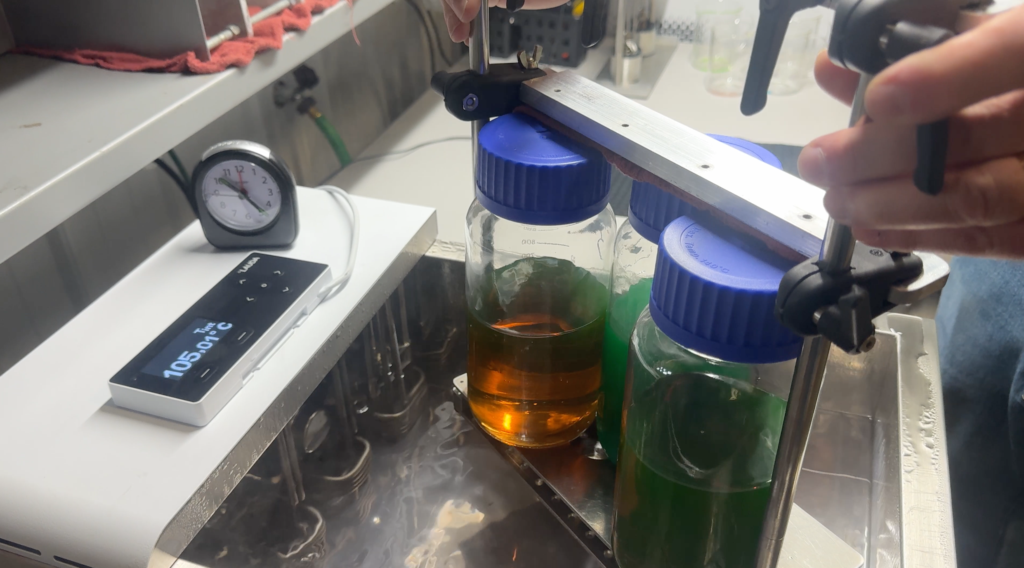
Initial appearance was not a reliable indicator. The differences developed with continued heat exposure.
Results were clear. The IAT + Violet OAT and IAT + Blue HOAT mixtures developed gel-like residue that migrated upward and ultimately reached the top fluid level in the sample jars, while the IAT + Orange OAT mixture showed only minimal residue growth from 2 mm to 3 mm.
Watch the video:
What the testing revealed
The IAT + Violet OAT mixture developed visible gel-like residue. The IAT + Blue HOAT mixture showed heavier accumulation. The IAT + Orange OAT mixture remained comparatively stable. These changes were more than discoloration. Material was forming within the fluid itself, with clear potential to interfere with circulation.
Detailed measurements show the difference:
- IAT + Violet OAT: residue progressed from 40 mm to 60 mm, then reached the top fluid line.
- IAT + Blue HOAT: residue progressed from 42 mm to 70 mm, then reached the top fluid level with a heavier Jello-like consistency.
- IAT + Orange OAT: residue changed only from 2 mm to 3 mm and remained minimal.
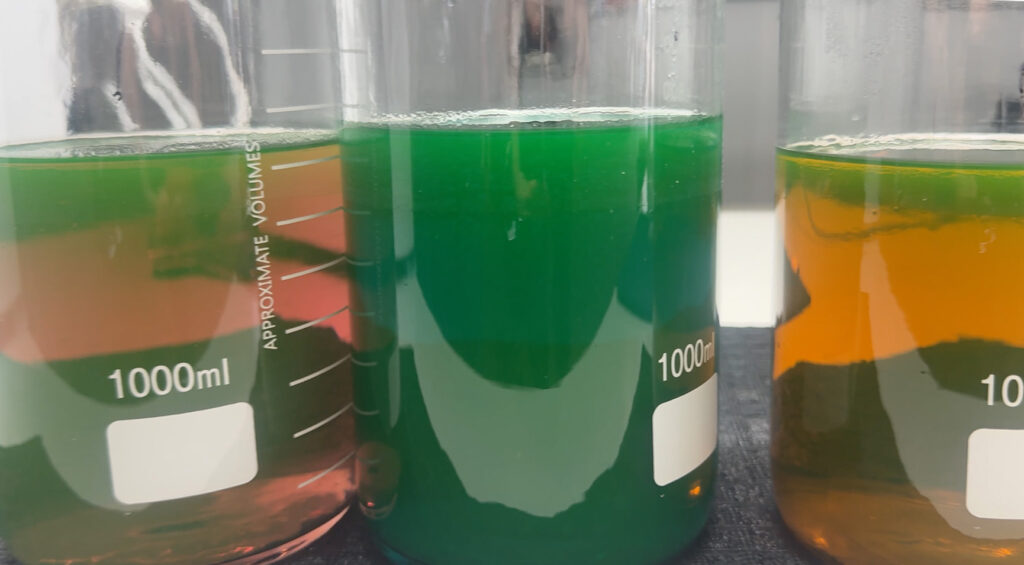
Laboratory testing showed major residue formation when conventional IAT coolant was mixed with Violet OAT and Blue HOAT. The IAT + Orange OAT mixture remained comparatively stable.
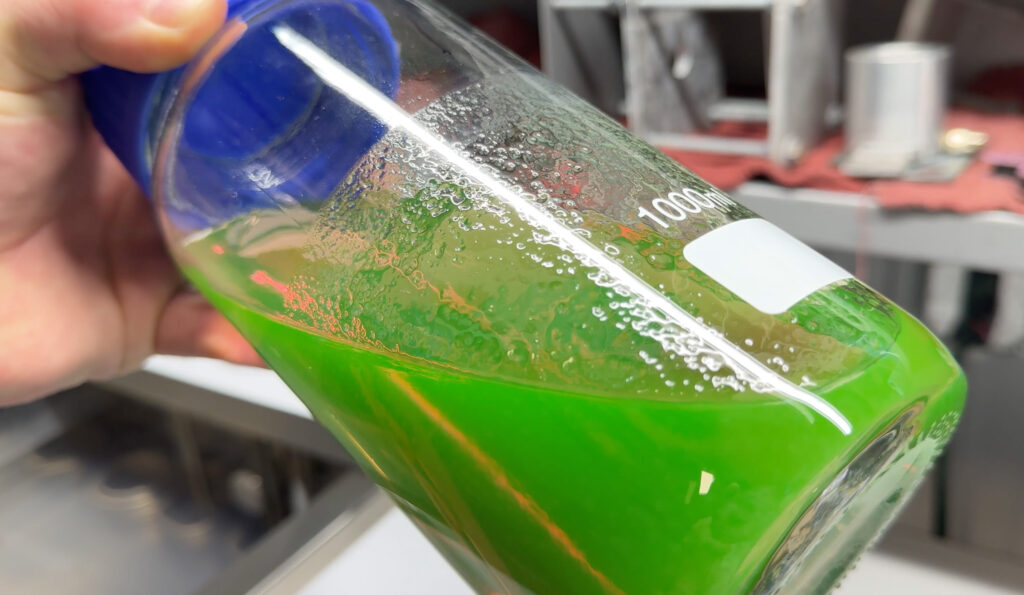
Flow restriction is where the problem becomes real
Flow behavior was then evaluated through filter media. This is where the visual change in the fluid translated into a direct cooling-system risk.
The Blue HOAT mixture sealed the media and did not allow fluid to pass after 20 minutes. The Violet OAT mixture passed with noticeable restriction and fully passed only after 10 minutes. The Orange OAT mixture allowed fluid to pass with minimal restriction.
That matters because once sludge or gel-like residue begins to restrict movement, the problem is no longer just chemical. It becomes mechanical and thermal. Coolant flow is reduced. Heat transfer suffers. System response becomes less stable.
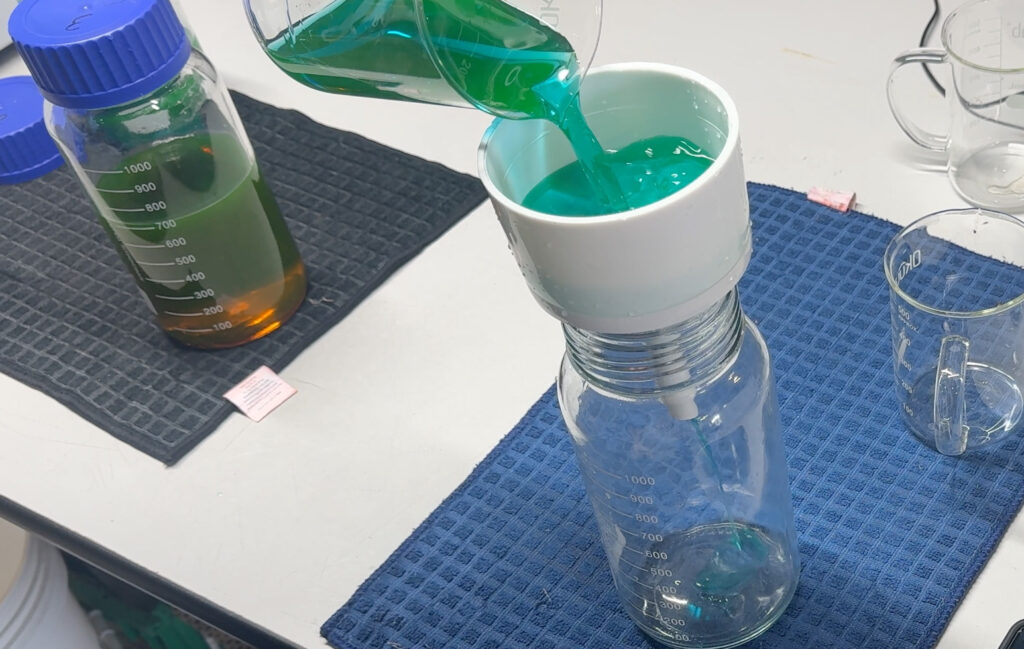
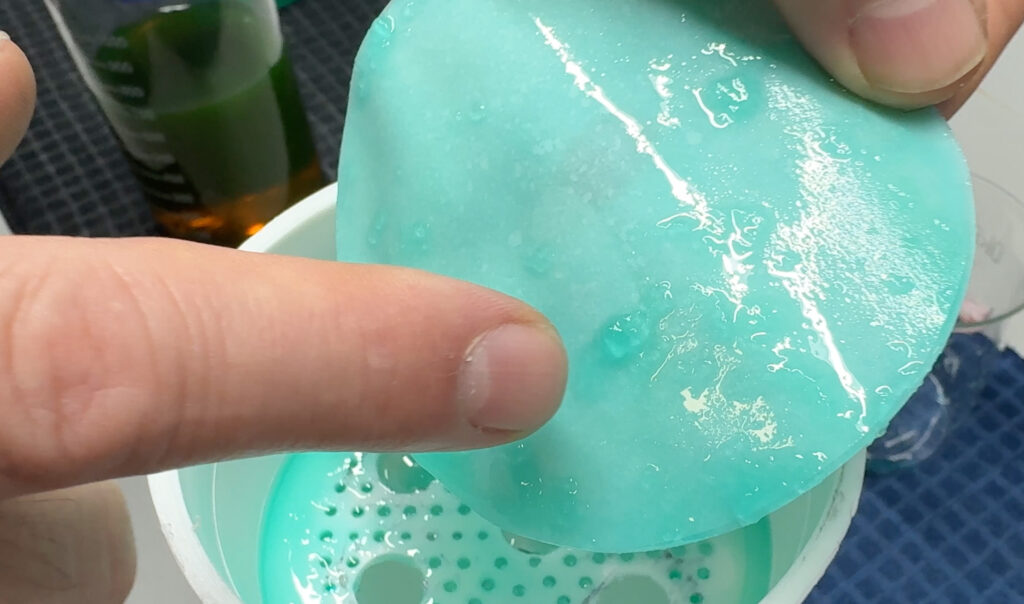
Flow testing confirmed that the IAT + Blue HOAT mixture sealed the media after 20 minutes, while the IAT + Violet OAT mixture passed with noticeable restriction and the IAT + Orange OAT mixture showed minimal restriction.
Why this affects thermostat and housing performance
Thermostat function depends on consistent coolant movement and thermal exposure. When sludge forms inside the coolant, it can reduce passage area, disturb circulation, and interfere with the thermostat’s ability to respond normally.
In service, that can lead to:
- overheating
- restricted circulation
- unstable temperature control
- poor heater performance
- repeat cooling-system complaints after parts replacement
This is especially important in systems with tighter internal geometry, where smaller passages are less tolerant of residue formation. In those systems, even moderate contamination can produce significant performance effects.
What appears to be thermostat failure may actually begin as a coolant chemistry problem.
Why this matters in modern thermostat housing systems
Modern thermostat housings do more than open and close coolant flow. Many are compact, application-specific assemblies that depend on stable coolant movement through tighter internal passages and controlled thermal response. That makes coolant condition especially important.
A good example is the TA1217 thermostat housing family. It reflects the reality of many modern cooling-system designs: compact packaging, application-specific thermal control, and lower tolerance for contamination-related restriction. In systems like these, contaminated coolant can reduce passage area, disturb circulation, and contribute to repeat overheating or thermostat-related complaints.
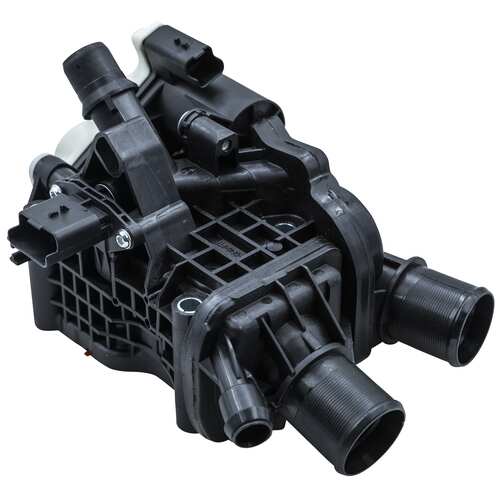
TA1217 application examples
Used in applications including Citroen C4, C5, DS4, DS5, Peugeot 308, 508, 3008, 5008, Ford Focus, Kuga, Mondeo, S-Max, Galaxy, Opel Grandland, Vivaro, Zafira, and Toyota Proace.
Common TA1217 interchange references
Citroen 9804160380, Citroen 9849443980, DS 9804160380, Ford 1876476, Ford 2264810, Ford DS7Q8A586AA, Ford DS7Q8A586AB, Opel 9804160380, Peugeot 9804160380, NRF 725439, Triscan 862028101, Vauxhall 9804160380, Vema 460435.
Download our printable PDF Tech Bulletin / White Paper on the subject of Engine Coolant Mixing and Compatibility: